


by
Subway structures face demanding waterproofing conditions. Stations, tunnels, shafts, equipment rooms, and passageways may remain exposed to groundwater throughout their service life. Hydrostatic pressure can also create a continuous challenge for underground concrete.
Unlike above-ground structures, completed subway structures can be difficult or expensive to access from the exterior. Therefore, selecting a durable waterproofing strategy is especially important for underground railway infrastructure.
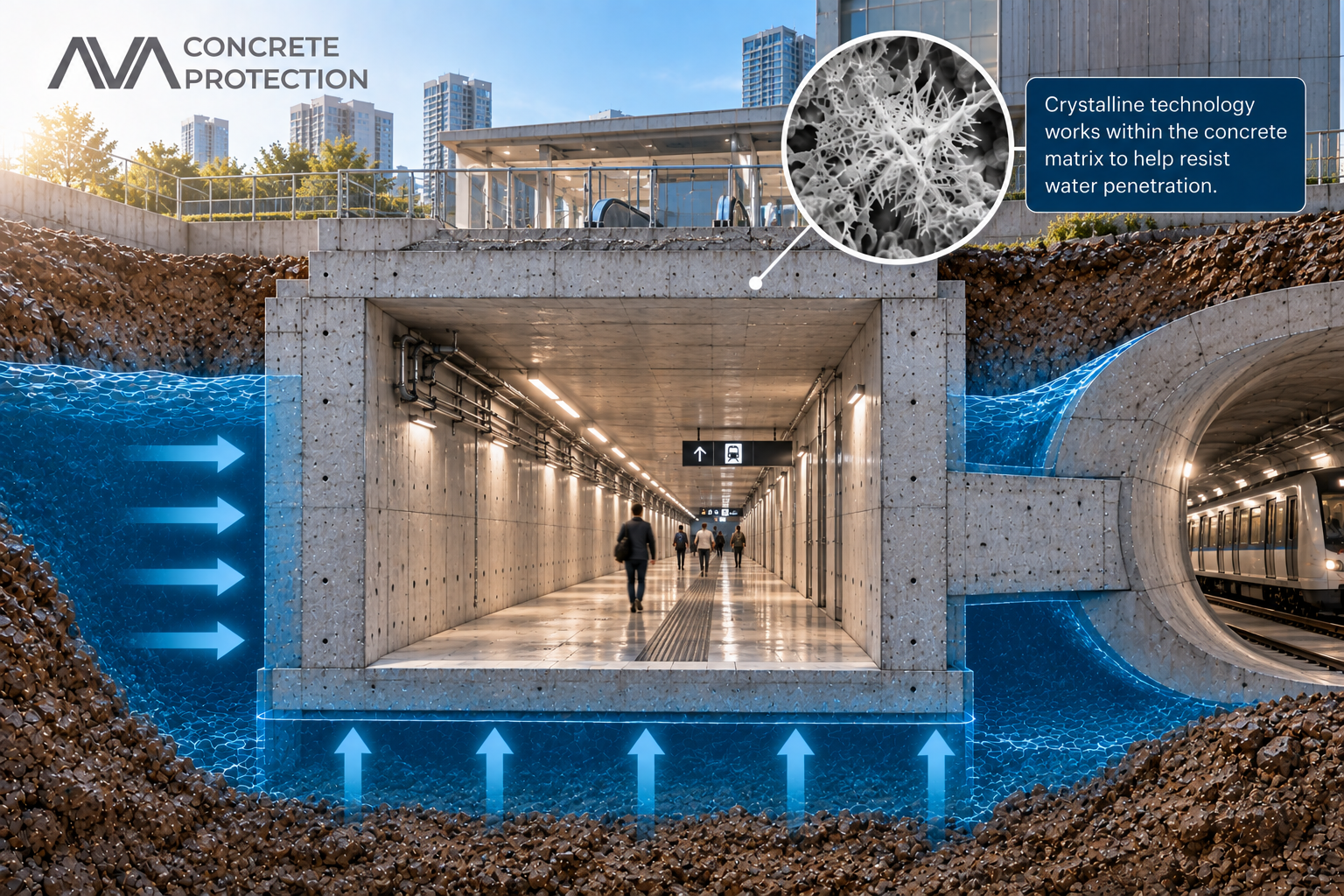
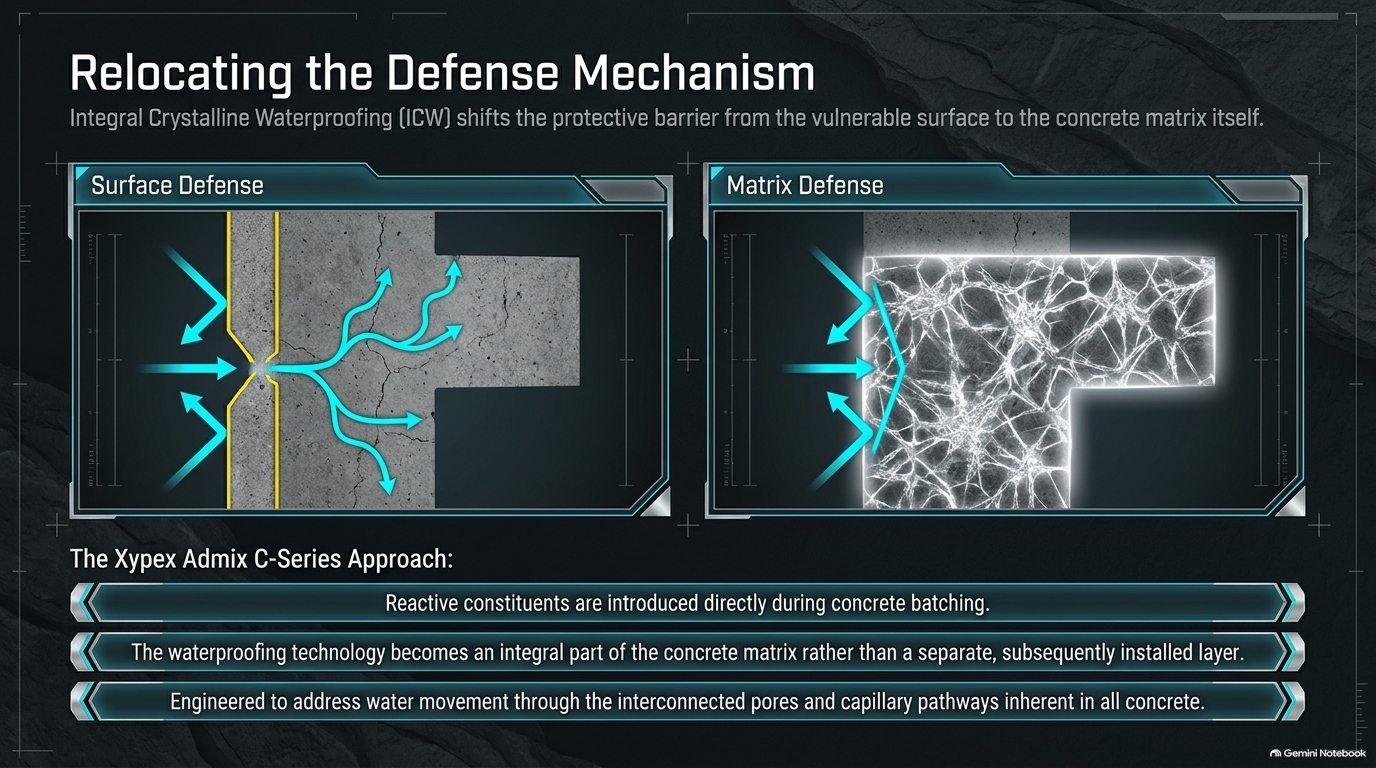
For these reasons, integral crystalline waterproofing for subway construction can suit demanding underground environments. The technology does not rely only on a barrier at the concrete surface. Instead, the crystalline technology works within the concrete matrix to help resist water penetration.
Engineers can specify integral crystalline waterproofing for subway construction during the concrete design stage. During batching, concrete producers add products such as Xypex Admix C-Series directly to the concrete mix. The admixture then becomes an integral part of the concrete. Xypex identifies tunnels and subway systems among the applications for its crystalline admixture technology.
However, integral crystalline waterproofing forms only one part of the overall waterproofing strategy. Engineers must still consider proper concrete design and joint detailing. The project design may also require waterstops, movement-joint systems, penetration details, drainage, and other waterproofing measures.
Quick Answer
Integral crystalline waterproofing is particularly suitable for subway construction because the waterproofing becomes part of the concrete rather than depending entirely on an externally applied surface barrier.
This can be advantageous for underground structures exposed to groundwater and hydrostatic pressure, particularly where exterior surfaces will become inaccessible after construction. However, joints, penetrations, moving cracks, interfaces, and other discontinuities still require appropriate engineered detailing.
What Is Integral Crystalline Waterproofing?
Integral crystalline waterproofing is a concrete-protection approach in which reactive constituents are incorporated into the concrete during batching.
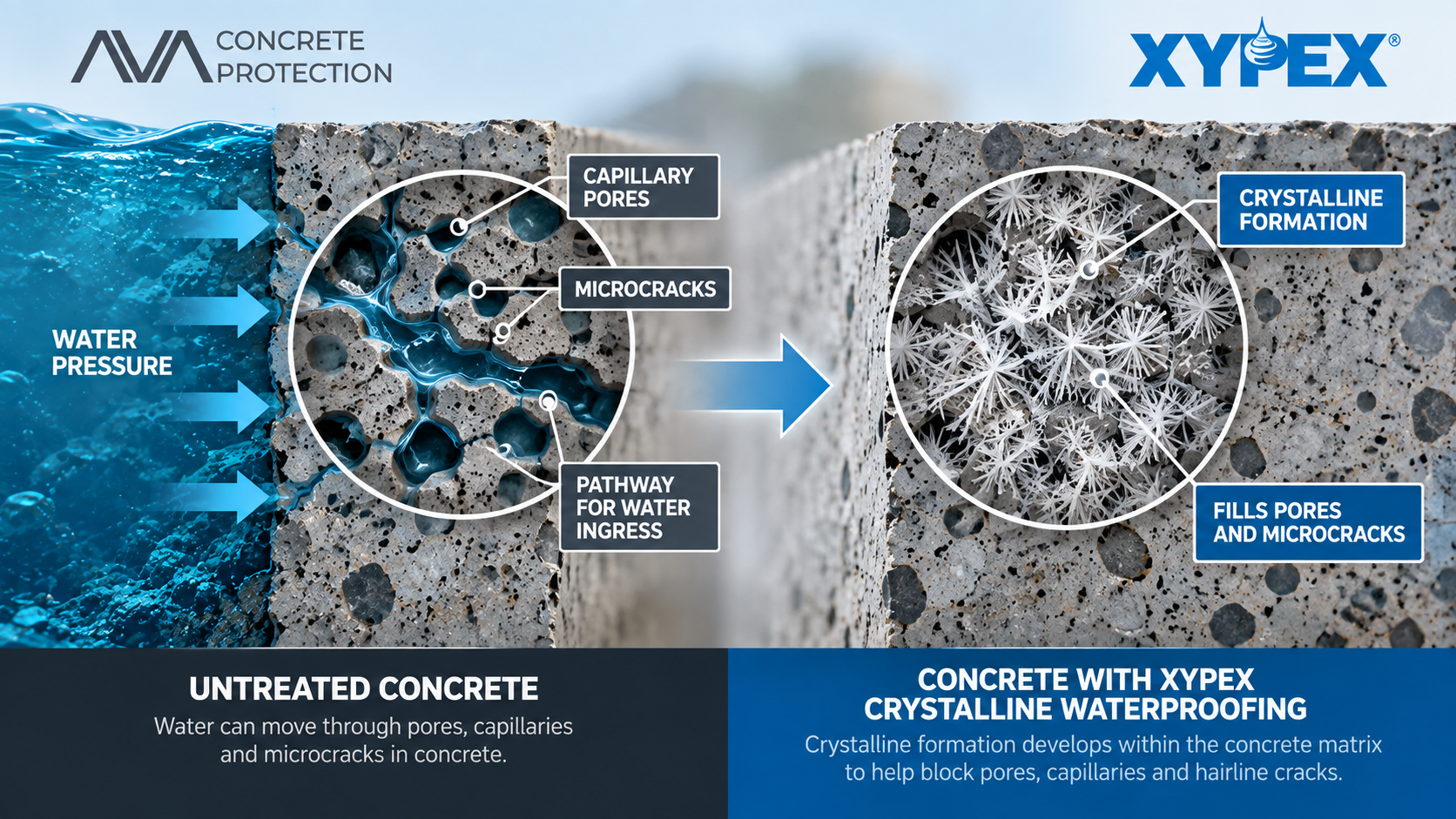
In the case of Xypex Crystalline Technology, Xypex states that its proprietary chemicals react with moisture and products of cement hydration to generate a non-soluble crystalline structure within the interconnected pores and capillary pathways of concrete.
The resulting crystalline formation reduces pathways through which water and other liquids can penetrate the concrete.
This distinguishes integral crystalline waterproofing from waterproofing systems that function primarily by creating a separate barrier on the concrete surface.
For subway structures, that distinction can be important because waterproofing may need to remain functional in concrete surrounded by groundwater and inaccessible soil for decades.
How Does Integral Crystalline Waterproofing Work?
Concrete appears solid, but its internal structure contains pores, capillaries, and microcracks. These pathways can allow water and moisture to move through the concrete.
Xypex Crystalline Technology uses moisture to activate its crystalline reaction. According to Xypex, its reactive chemicals interact with water and cement-hydration products. This reaction creates insoluble crystalline formations within the concrete.
The crystals develop inside pores, capillaries, and certain pathways in the concrete. As a result, the technology helps reduce water penetration from within the concrete matrix rather than relying only on a surface barrier.
For new subway construction, contractors can add Xypex Admix C-Series during concrete batching. This makes the crystalline waterproofing treatment an integral part of the concrete.
Potential underground applications include:
Xypex identifies precast concrete, cast-in-place concrete, and shotcrete among applications for its tunnel waterproofing technology.
For integral crystalline waterproofing for subway construction, this approach can be particularly useful where concrete faces groundwater or hydrostatic pressure. However, engineers must still address construction joints, movement joints, penetrations, waterstops, concrete quality, and other project-specific waterproofing details.
Why Is Waterproofing So Important in Subway Construction?
Subway structures are often built below the groundwater table.
Consequently, water can exert continuous pressure against tunnel linings, station walls, foundation slabs, shafts, and other underground structural elements.
Water ingress can create operational and durability problems.
Potential consequences include:
- Leakage into stations and tunnels
- Moisture entering equipment or service spaces
- Deterioration associated with persistent water exposure
- Increased risk of reinforcement corrosion where aggressive substances reach the reinforcement
- Recurring maintenance requirements
- Leakage through concrete defects
- Leakage through construction joints or penetrations
Xypex identifies hydrostatic pressure, concrete permeability, construction-joint defects, honeycombing, rock pockets, tie holes, cracking, and joint leakage among the waterproofing challenges associated with tunnel construction.
The objective should therefore extend beyond simply keeping the visible interior surface dry.
A subway waterproofing strategy should contribute to controlling water ingress while supporting the required durability and serviceability of the underground concrete structure.
Why Integral Crystalline Waterproofing Is Well Suited to Subway Construction
Integral Concrete Protection
Controls Water Movement
Hydrostatic Protection
Less Surface Dependence
Simplified Construction
Static Crack Sealing
Precast Tunnel Protection
Integral Concrete Protection
Integral Concrete Protection
Controls Water Movement
Hydrostatic Protection
Less Surface Dependence
Simplified Construction
Static Crack Sealing
Precast Tunnel Protection
Integral Protection for Inaccessible Subway Concrete
Integral crystalline waterproofing for subway construction provides protection within the concrete matrix rather than relying solely on an external waterproofing layer. Concrete producers add Xypex Admix during batching, allowing the crystalline technology to become part of the hardened concrete. This approach is especially relevant to subway tunnels, station boxes, and other below-grade structures. After construction, soil, backfill, utilities, and surrounding infrastructure can make exterior concrete difficult to reach. Integrating waterproofing into the concrete can therefore reduce reliance on future access to buried surfaces for waterproofing maintenance and repair.
Controls Water Movement Through the Concrete Matrix
Integral crystalline waterproofing for subway construction helps address water movement through the concrete itself. Groundwater can penetrate concrete through interconnected pores, capillaries, and other pathways, not only through visible cracks. Crystalline technology works within these pathways to help reduce water penetration through the concrete matrix. This makes the approach particularly relevant for subway tunnels, station boxes, and other underground structures exposed to persistent moisture and hydrostatic pressure.
Performs Under Hydrostatic Pressure
Integral crystalline waterproofing for subway construction is particularly relevant where concrete faces continuous groundwater and hydrostatic pressure. Unlike occasional rain or surface moisture, hydrostatic pressure can force water through pores, capillaries, and other pathways in concrete. Xypex states that its crystalline technology helps resist this water penetration by forming crystals within the concrete matrix. However, engineers should verify the required performance against product data, test documentation, groundwater conditions, concrete design, project specifications, and other project-specific requirements.
Reduces Reliance on Exposed Waterproofing Layers
Integral crystalline waterproofing for subway construction reduces reliance on a separate waterproofing layer installed on the concrete surface. Membranes can provide effective protection, but their performance depends on barrier continuity, installation quality, penetrations, laps, terminations, and substrate conditions. Crystalline technology takes a different approach by working within the concrete matrix. This can benefit complex subway structures where reinforcement, limited access, construction sequencing, and challenging geometry can complicate external membrane installation. However, crystalline waterproofing does not make membranes unnecessary in every project. Engineers may specify both systems when project conditions require complementary protection.
Simplifies Certain Construction Sequences
Integral crystalline waterproofing for subway construction can simplify certain construction activities because contractors introduce the crystalline admixture during concrete batching. When engineers approve an integral system as the primary waterproofing strategy, the project may reduce separate waterproofing work across selected concrete surfaces. This approach can influence several aspects of construction:
That can affect:
- Waterproofing sequencing
- Number of site operations
- Coordination between trades
- Protection of completed waterproofing
- Access requirements
- Construction scheduling
The actual schedule or cost benefit should be evaluated project by project rather than assumed.
A useful real-world example is the:
According to Xypex’s project documentation, Xypex Admix C-2000 NF and Xypex Concentrate were specified for Phase III underground stations. The admixture was also incorporated into concrete used for tunnel-liner segments.
Importantly, the project did not initially treat crystalline waterproofing as a universal replacement for every other system. Xypex reports that spray-applied membrane remained on the rooftop slab during Phase III.
That illustrates an important engineering principle: waterproofing systems can be selected differently for different structural elements.
Helps Seal Certain Static Hairline Cracks
Integral crystalline waterproofing for subway construction can help address certain static hairline cracks that develop in reinforced concrete. Cracks may form because of shrinkage, thermal effects, restraint, loading, or construction conditions. Xypex states that its crystalline technology can seal static hairline cracks up to 0.5 mm (0.02 in.) under suitable conditions. However, this capability is specific to Xypex and should not apply broadly to all crystalline waterproofing products. It also does not mean that Xypex prevents concrete from cracking. Active cracks, structural cracks, movement joints, and cracks that continue to widen require engineering assessment and appropriate repair or joint systems.
Supports Precast Tunnel Segment Construction
Integral crystalline waterproofing for subway construction can also form part of precast tunnel segment production. Modern subway projects often use tunnel boring machines with precast concrete segmental linings. During manufacturing, concrete producers can add Xypex Admix C-Series directly to the concrete mix before casting the tunnel segments. The Delhi Metro provides a documented example, with Xypex reporting the use of its C-Series admixture in tunnel-liner segments for tunnel-boring-machine construction. However, waterproofing the concrete does not automatically waterproof the interfaces between individual segments. Engineers must still address segment gaskets, joints, connections, penetrations, and other details as part of the complete tunnel waterproofing design.
Why This Matters for Subway Construction in the Philippines
Philippine underground infrastructure can face demanding moisture conditions.
High seasonal rainfall, groundwater, tropical humidity, flooding exposure, and dense urban construction can increase the importance of controlling water ingress in underground stations and tunnels.
For subway infrastructure, the consequences of leakage can extend beyond cosmetic deterioration.
Underground railway facilities can contain:
- Electrical equipment
- Communications infrastructure
- Mechanical systems
- Escalator and elevator systems
- Plant rooms
- Service corridors
- Passenger areas
- Ventilation systems
Waterproofing should therefore be considered part of the broader durability and operational strategy for the underground structure.
Integral crystalline waterproofing may be particularly valuable where the objective is to make the reinforced concrete itself less permeable rather than relying entirely on an externally applied barrier.
Where Can Integral Crystalline Waterproofing Be Used in a Subway?
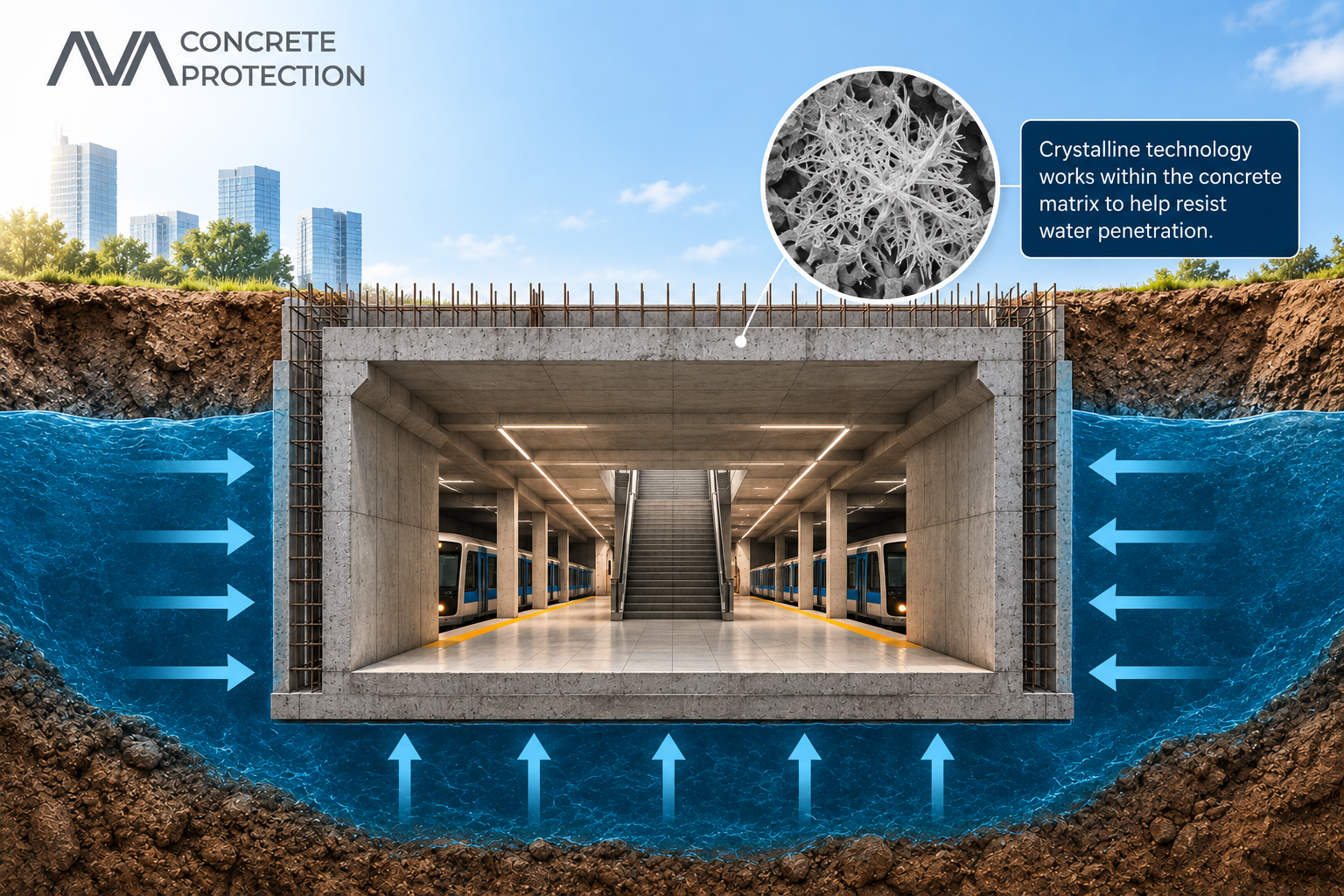
Station Boxes
Reinforced-concrete station walls and slabs can be exposed continuously to surrounding groundwater.
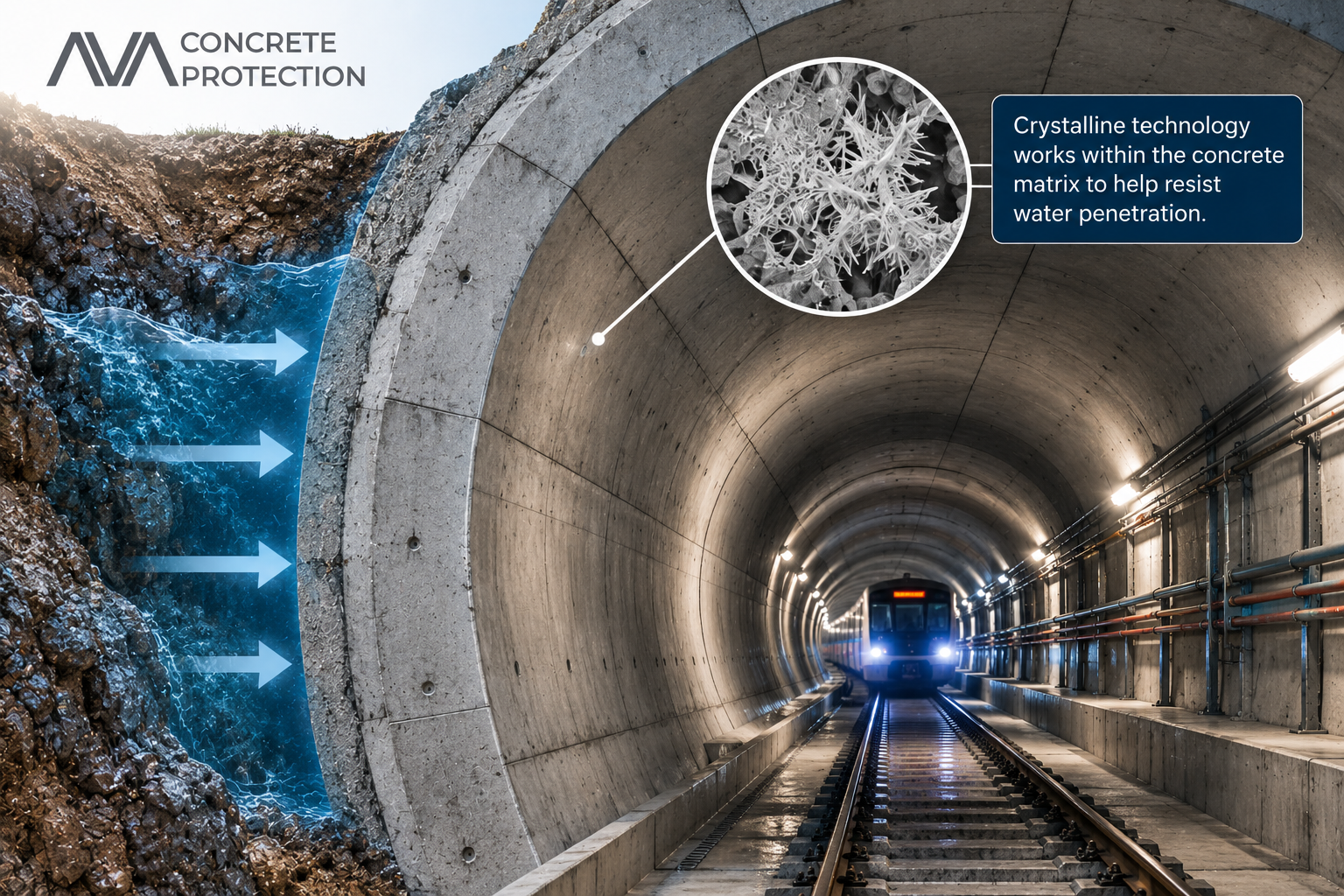
Tunnel Linings
Cast-in-place secondary linings and other concrete tunnel elements may potentially incorporate crystalline admixtures depending on the tunnel design and specification.
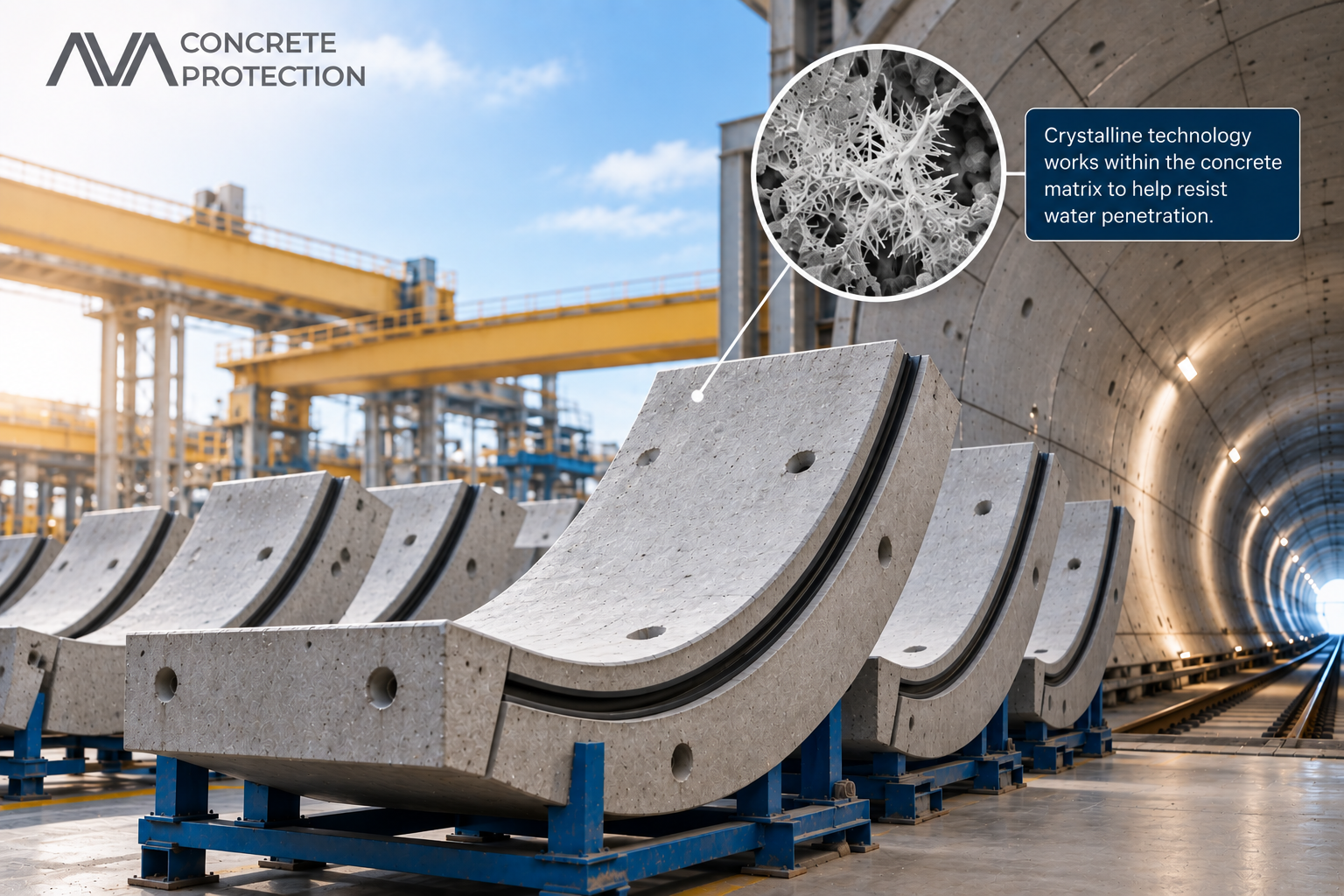
Precast Tunnel Segments
Crystalline admixtures can be incorporated during precast production.
Waterproofing of the segment joints must still be addressed separately.
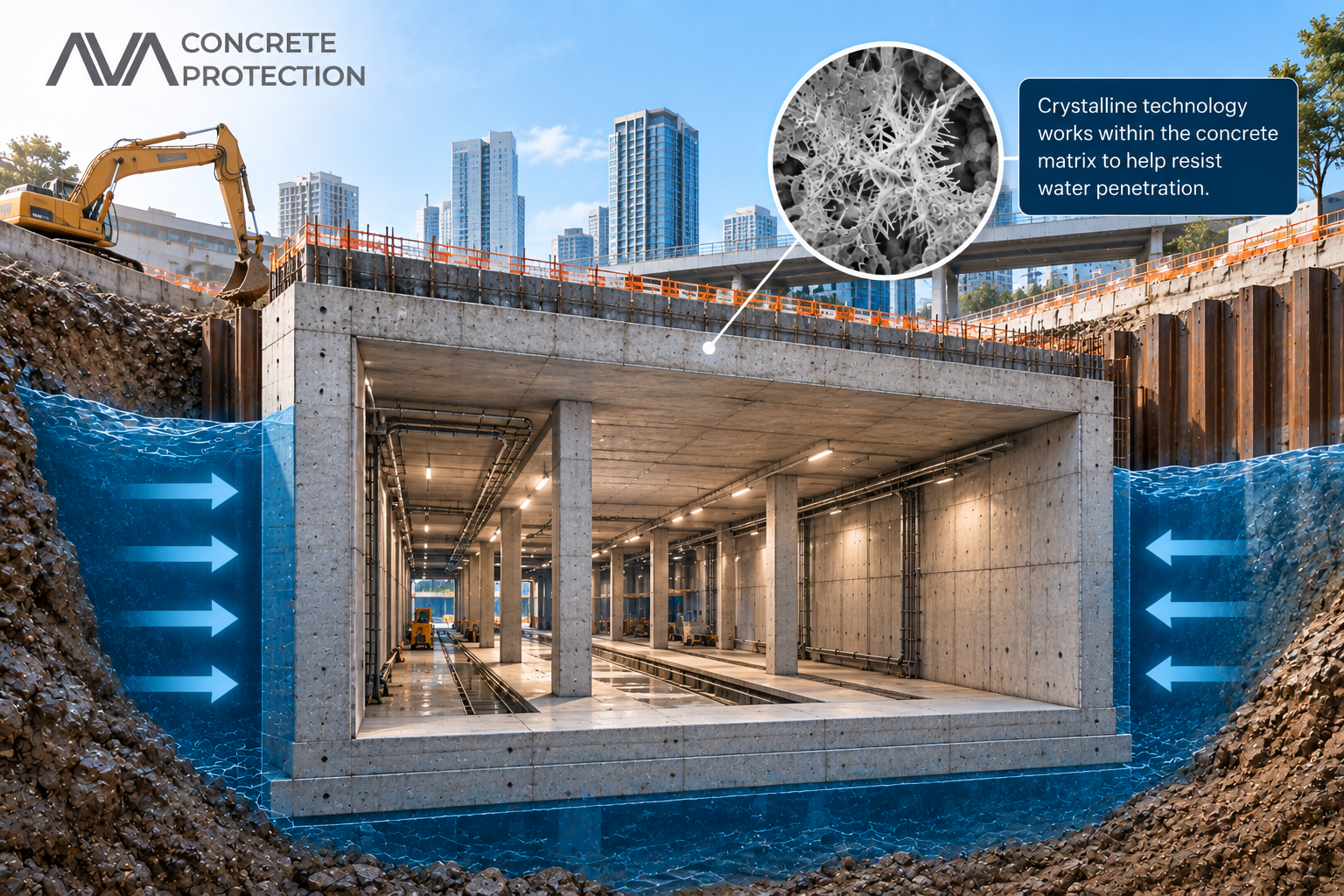
Cut and Cover Structures
Cut-and-cover construction can involve extensive reinforced-concrete walls, base slabs, and roof slabs.
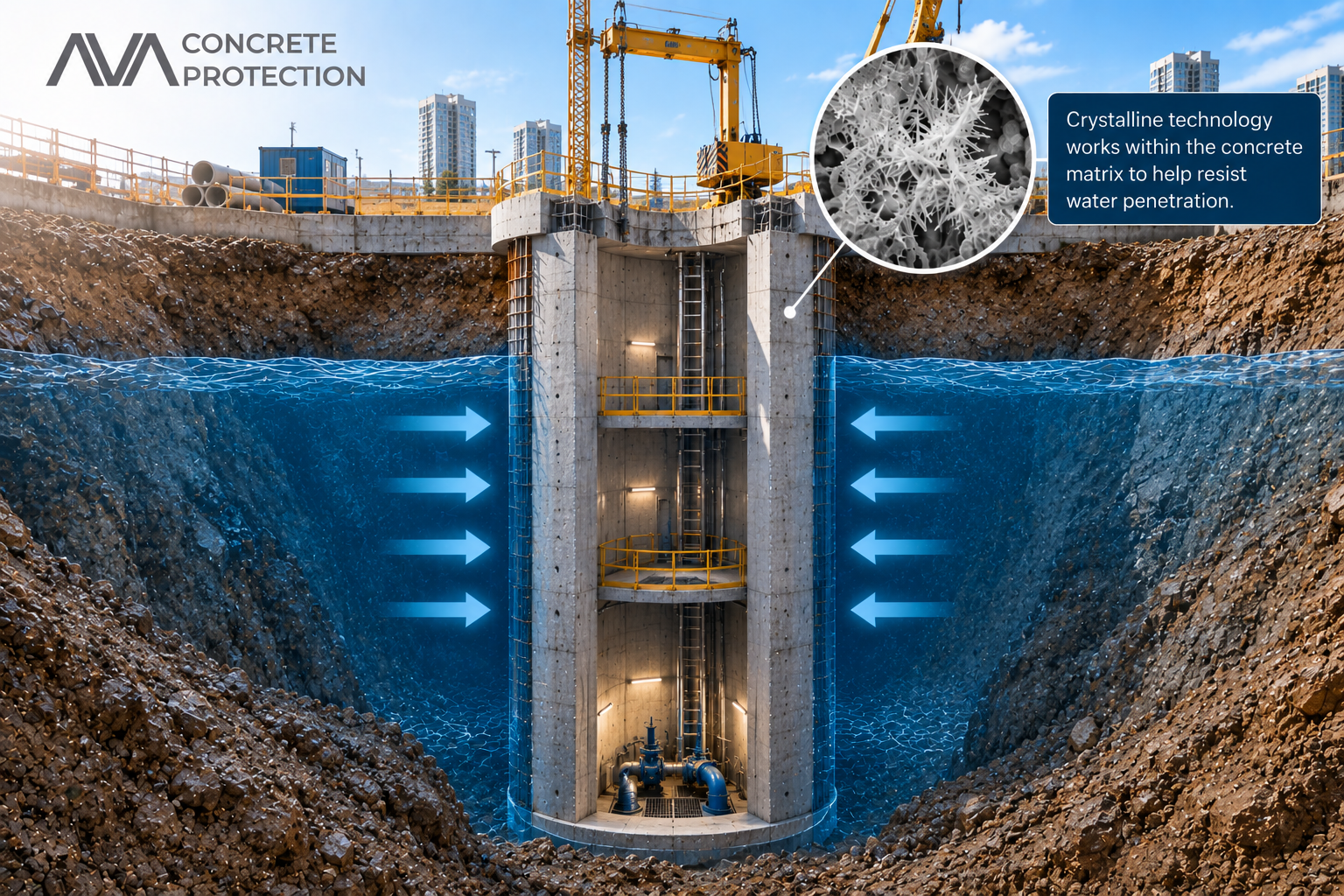
Shafts
Access, ventilation, emergency, and equipment shafts can extend deeply below grade and may experience groundwater pressure.
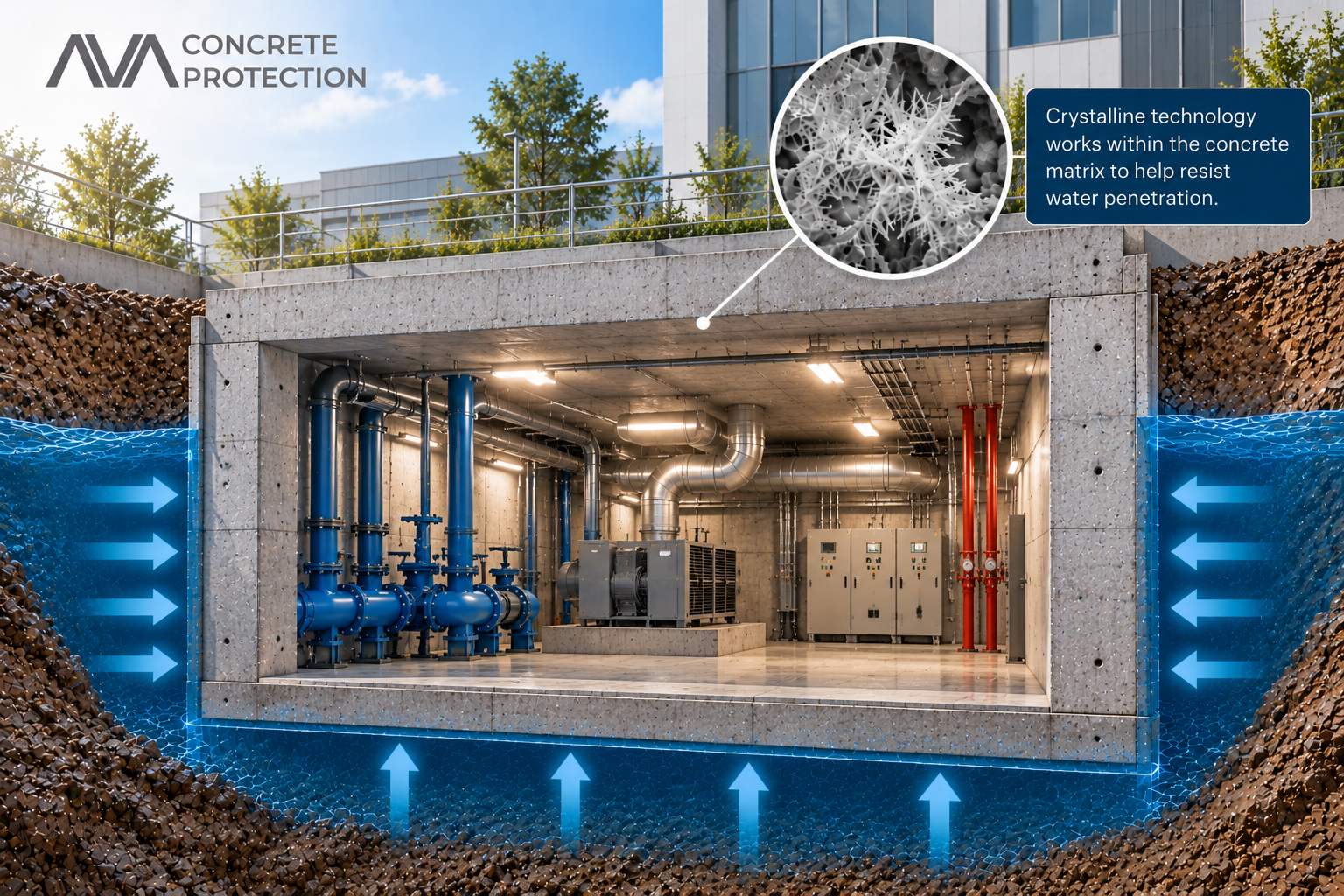
Equipment and Mechanical Rooms
Water ingress around underground technical spaces can interfere with building services and equipment.
Passageways and Underground Connections
Connecting structures between stations, tunnels, shafts, and other underground spaces may also benefit from integral concrete waterproofing.
Real-World Applications of Crystalline Waterproofing in Subway Projects
Documented subway and tunnel projects provide useful evidence of how crystalline waterproofing has actually been applied.
Delhi Metro, India
For Delhi Metro Phase III, Xypex reports that its Admix C-2000 NF and Concentrate products were specified for underground station waterproofing.
Applications included tunnel-liner segments, cut-and-cover construction, diaphragm walls, underground station structures, and roof slabs.
According to Xypex, the Delhi Metro Rail Corporation subsequently approved the crystalline solution for approximately 27 km of new underground tunnels in Phase IV.
This is manufacturer-published project evidence and should be identified as such.
Washington D.C. Metro, United States
Xypex reports that its products were specified for various locations within the Washington D.C. Metro system, including tunnel sections, shotcrete vaults, passageways, mechanical rooms, equipment vaults, elevator shafts, and station areas.
The system was also used to address leakage associated with concrete defects and hydrostatic pressure.
Ankara Subway Tunnels, Turkey
According to Xypex, approximately 11,000 linear metres of cracks were repaired using Patch’n Plug, while approximately 5,600 m² was treated using Xypex Concentrate and Modified.
This example is particularly useful because it demonstrates that crystalline technology is not limited to admixtures for new concrete. Surface-applied and repair products can also form part of rehabilitation strategies for existing underground infrastructure.
Dubai Metro, United Arab Emirates
Xypex documents the use of Xypex Concentrate around drainage channels within sections of the Dubai Metro Red and Green Line tunnels where existing concrete was exposed to persistent moisture and water.
Again, this was a surface-applied treatment rather than evidence that one waterproofing approach is appropriate for every subway element.
What Are the Limitations and Design Considerations?
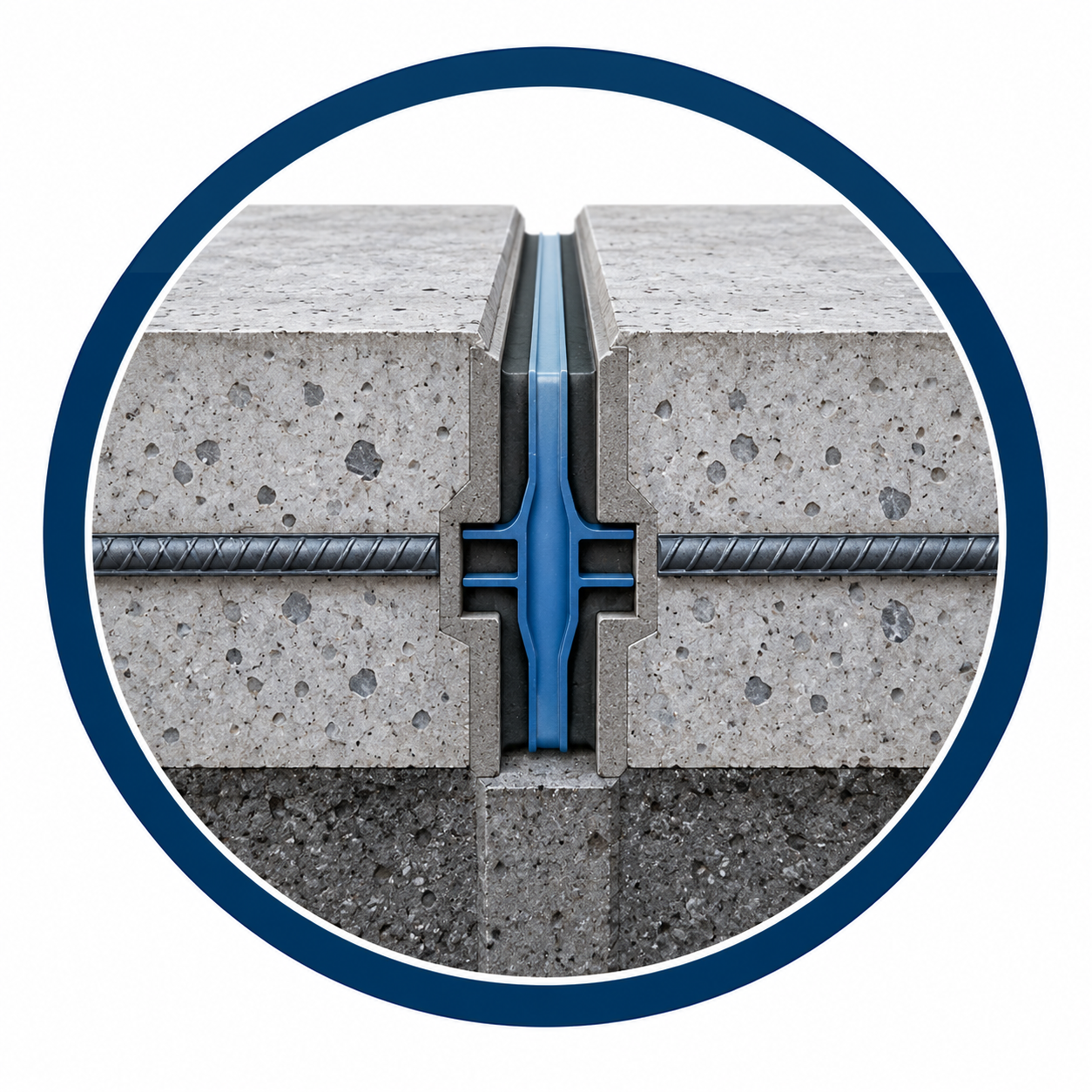
Construction Joints
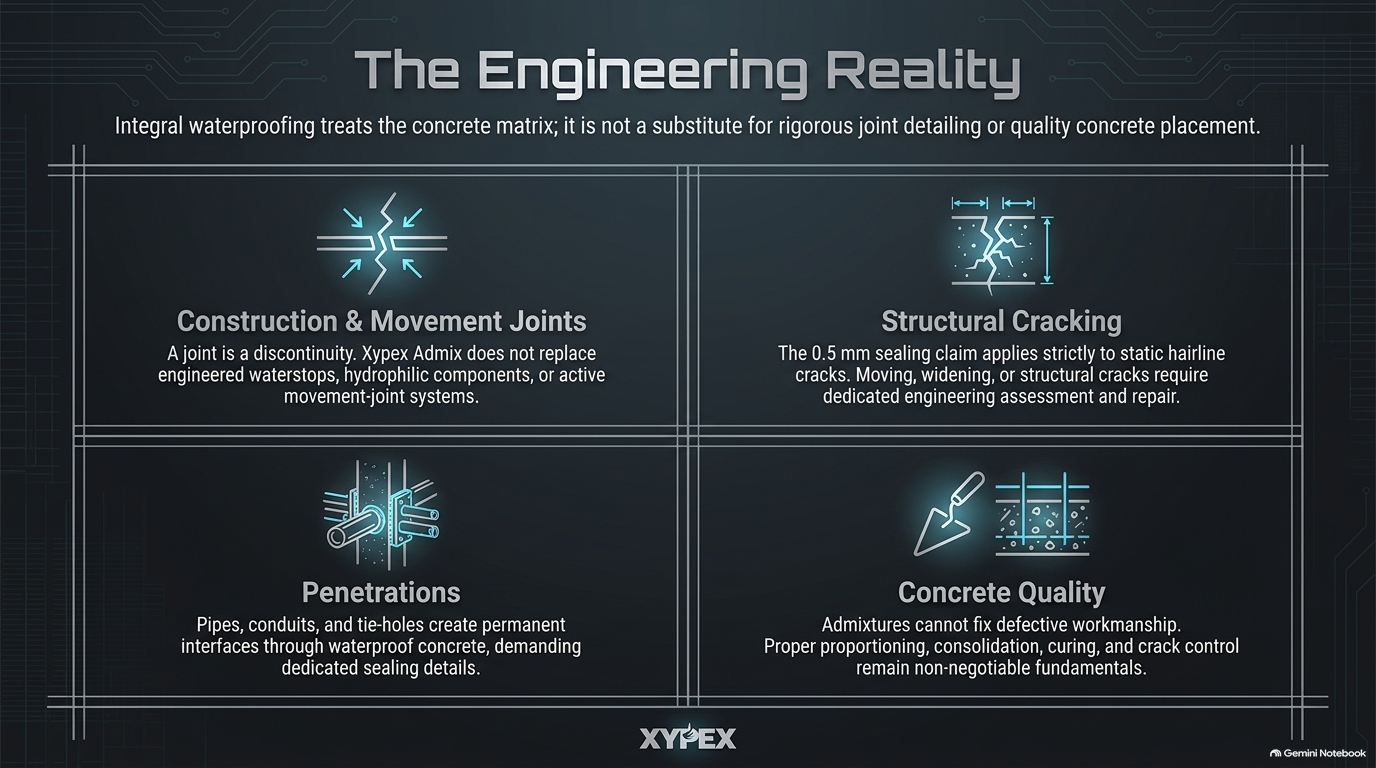
A construction joint remains a discontinuity between separate concrete placements even when the concrete on both sides contains crystalline admixture.
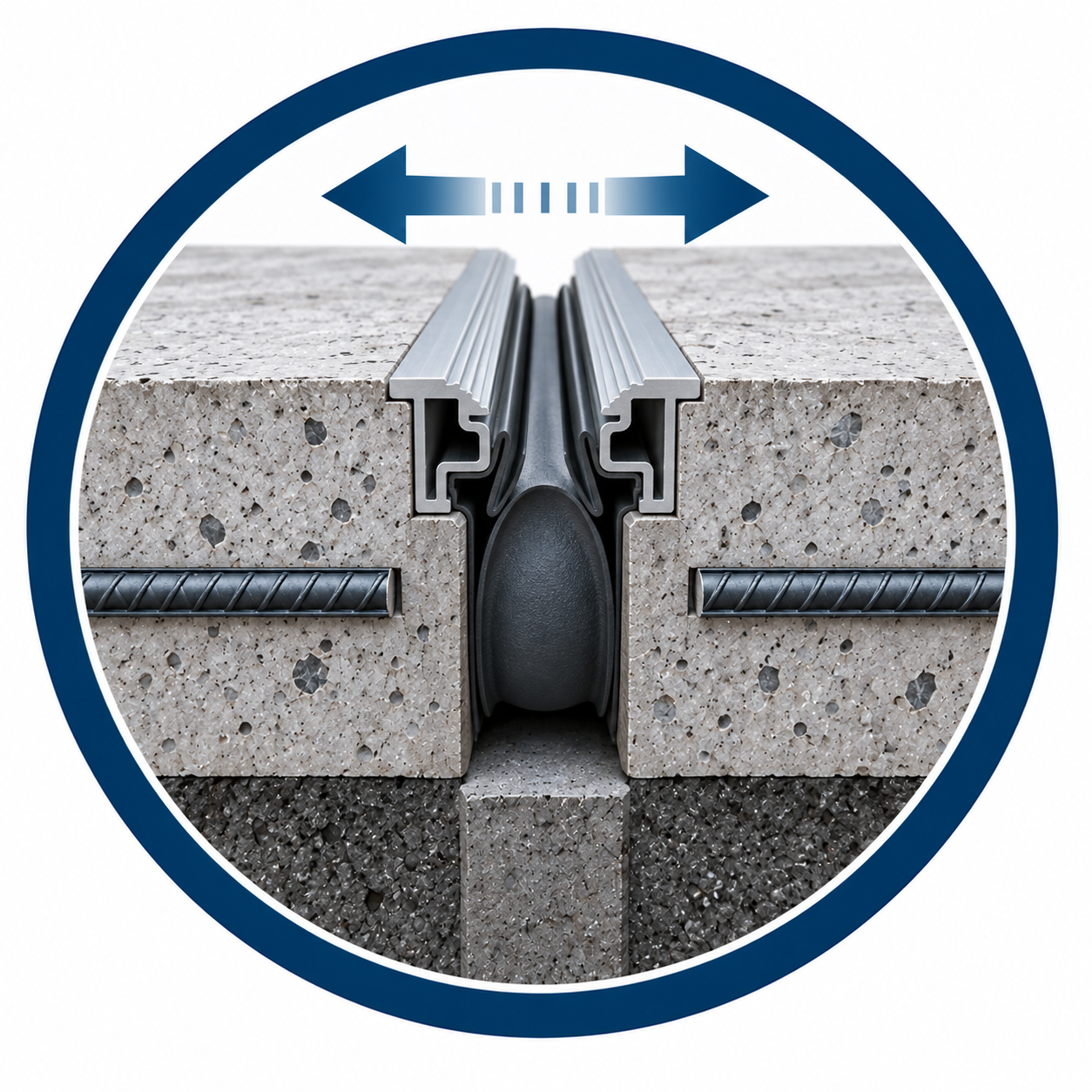
Expansion and Movement Joints
Integral crystalline admixtures should not be represented as a replacement for engineered movement-joint systems. Movement joints require details capable of accommodating the expected movement while maintaining watertightness.
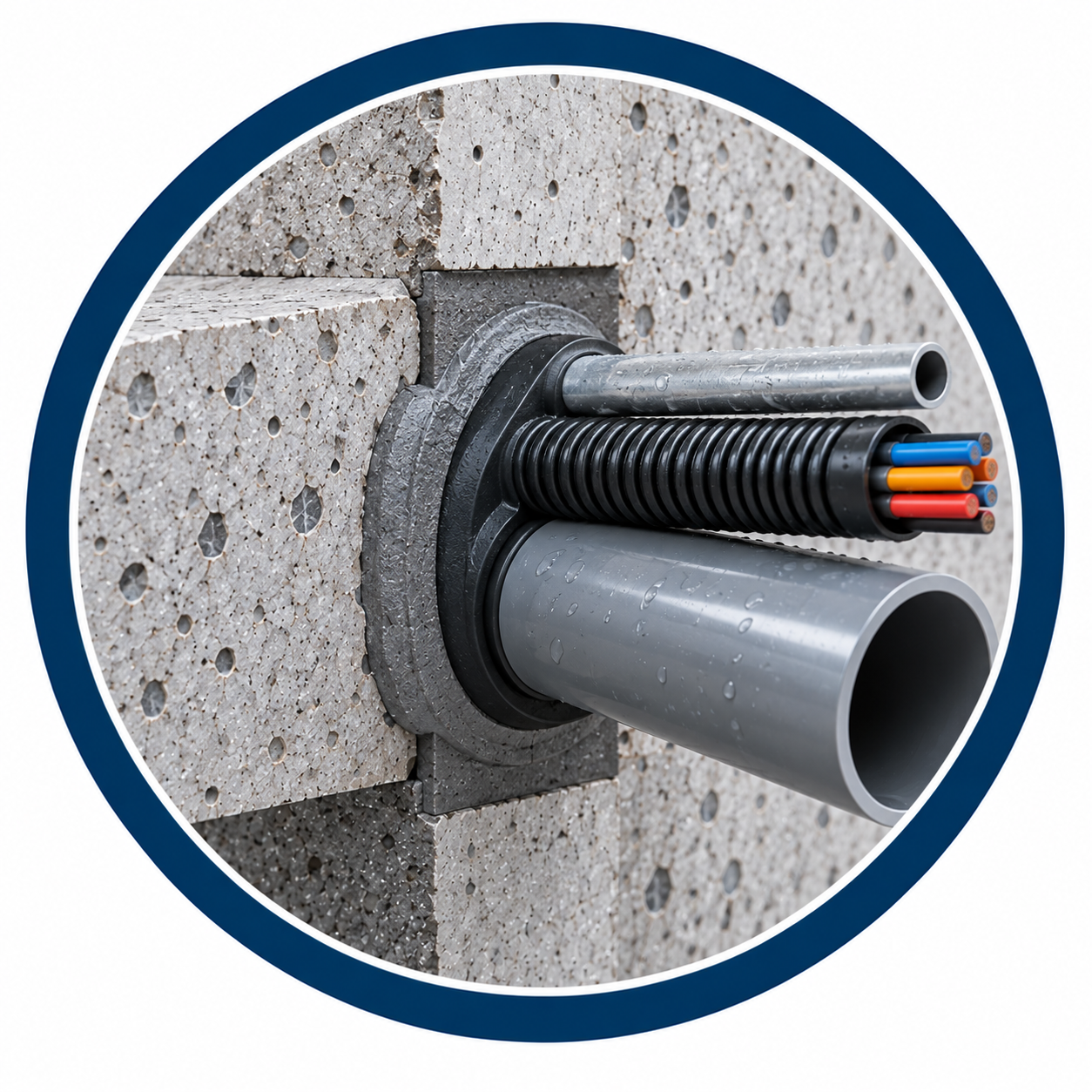
Penetrations
Pipes, conduits, sleeves, anchors, and other penetrations create discontinuities through otherwise waterproof concrete. These interfaces require dedicated waterproofing details.
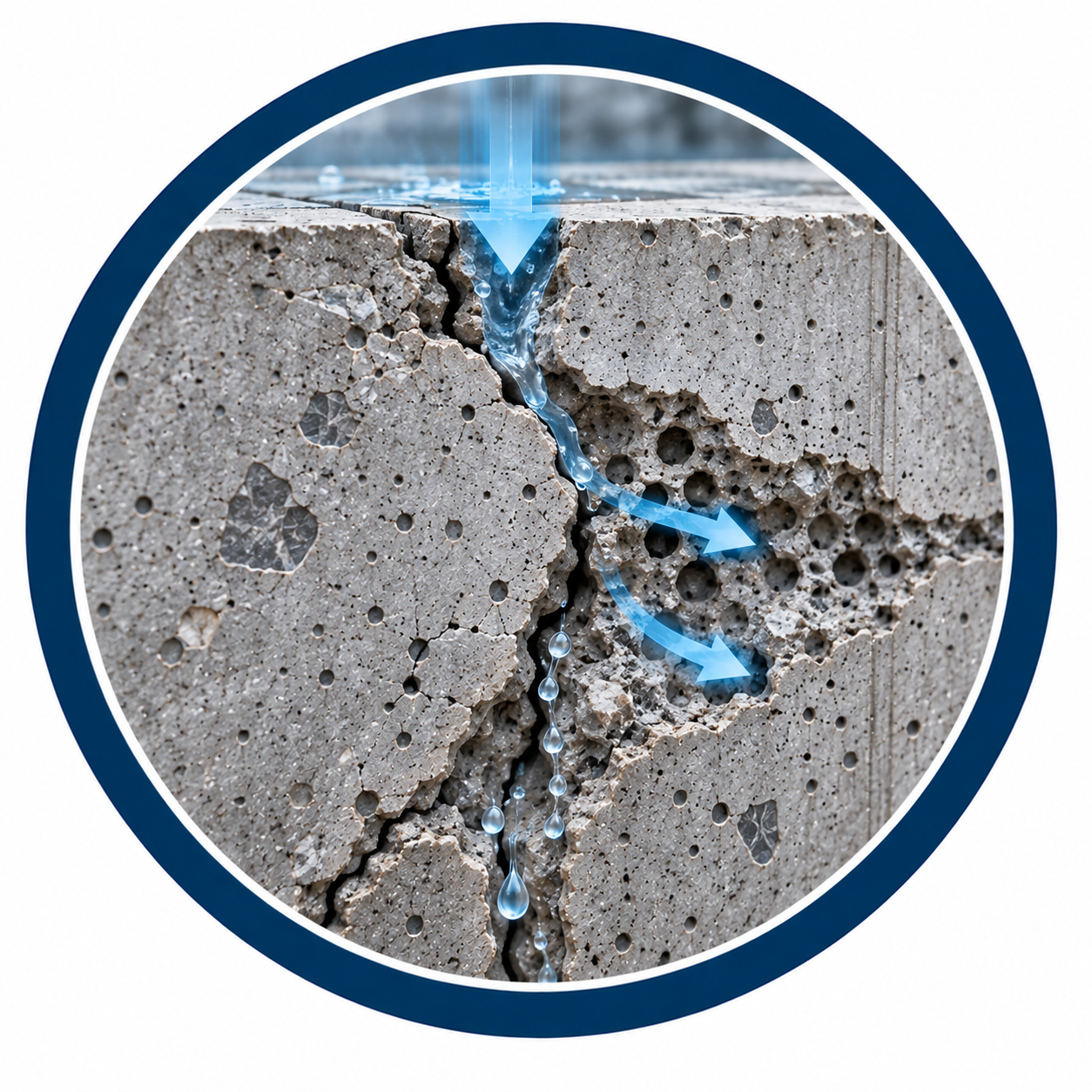
Concrete Defects
Honeycombing, rock pockets, poorly consolidated concrete, tie holes, major cracks, and other defects may require repair. An admixture should not be used as justification for accepting defective concrete workmanship.
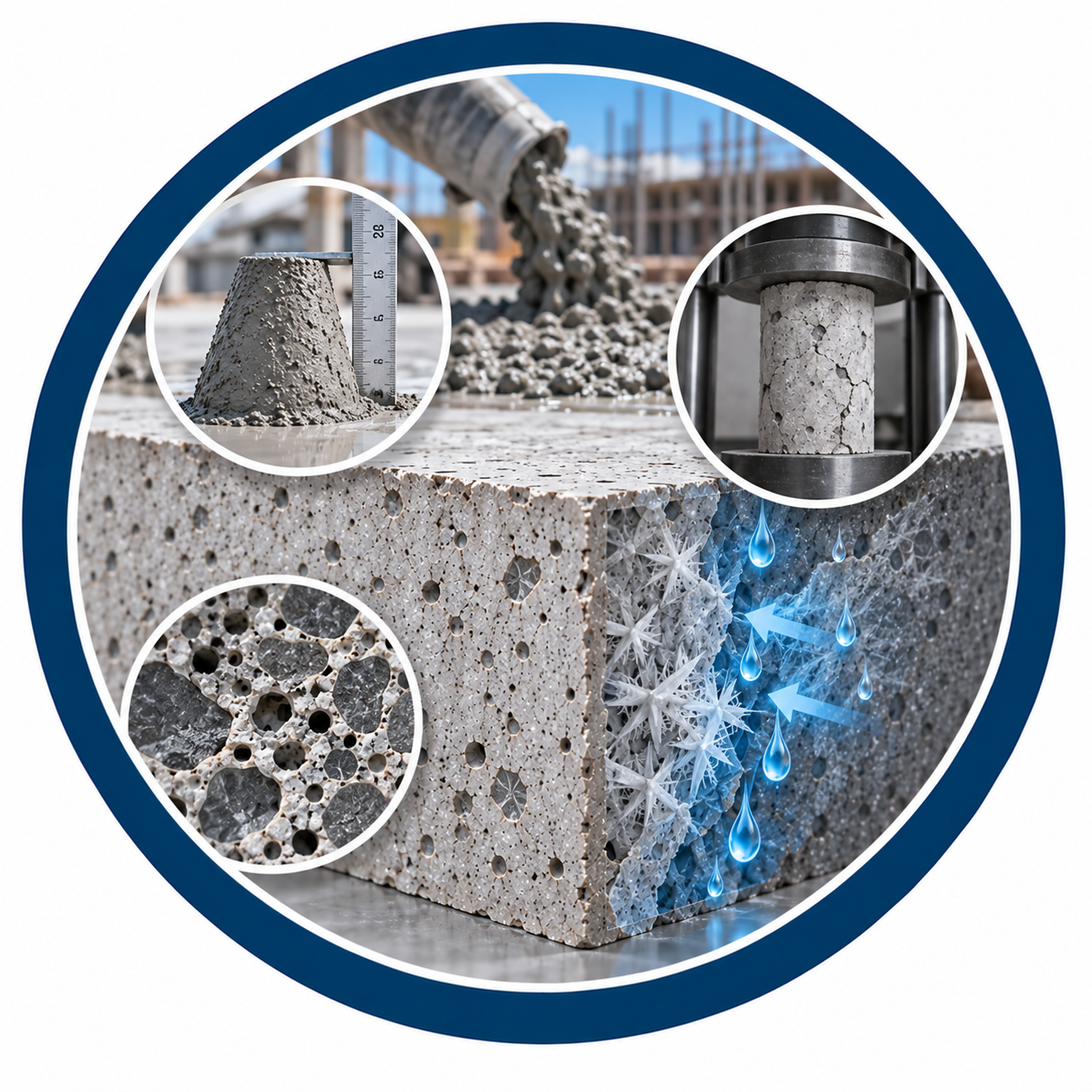
Concrete Quality
Integral waterproofing performs within the concrete matrix. Concrete proportioning, placement, consolidation, curing, reinforcement detailing, crack control, and quality assurance therefore remain fundamental.
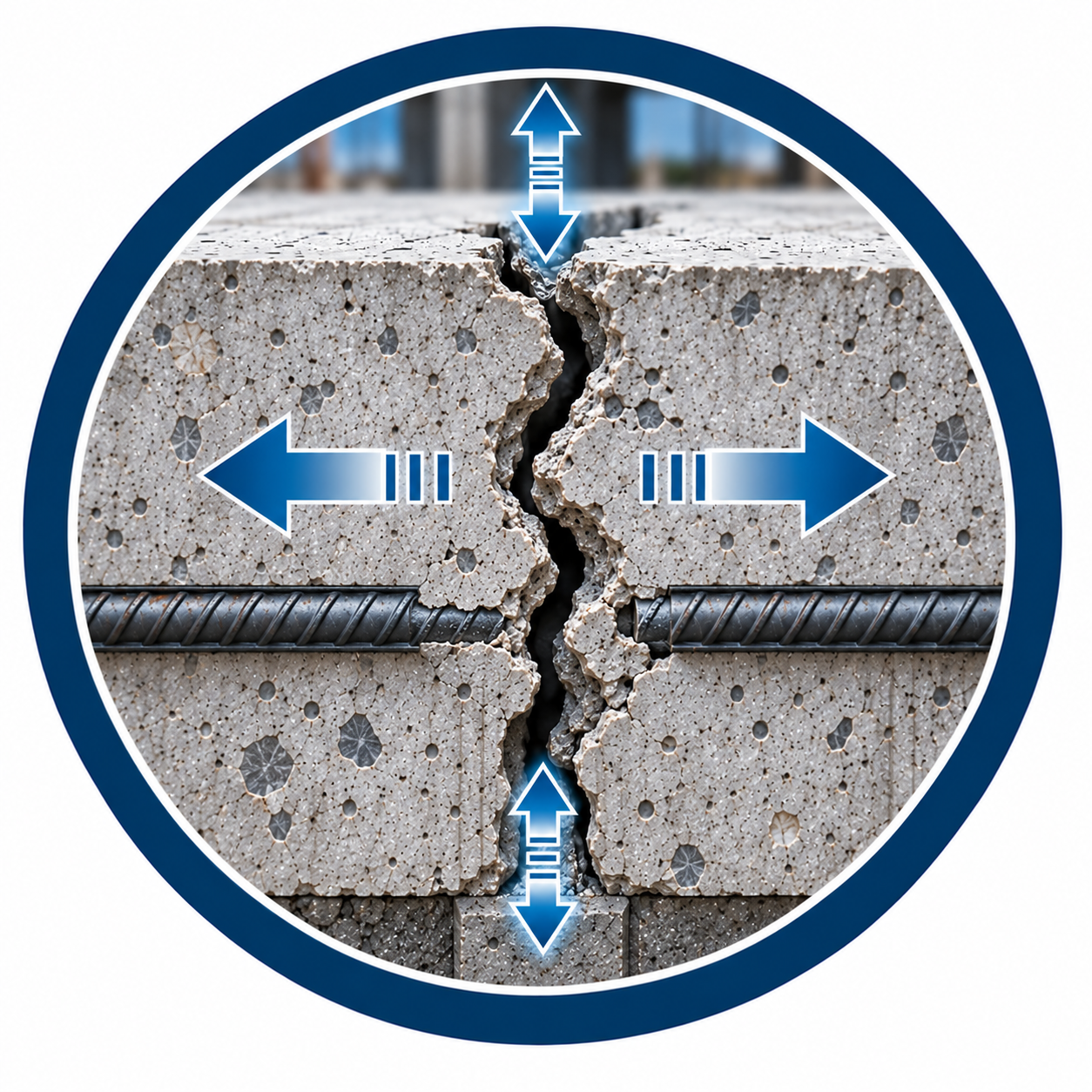
Active or Structural Cracking
The Xypex 0.5 mm crack-sealing claim applies to certain static hairline cracks. Moving, widening, structural, or otherwise significant cracks require engineering assessment.
Integral Crystalline Waterproofing vs Membrane Waterproofing
NNeither integral crystalline waterproofing nor membrane waterproofing offers the best solution for every subway project. Engineers should select the appropriate system based on groundwater conditions, structural design, construction methods, accessibility, joint requirements, and project specifications.
The table below compares key considerations for subway waterproofing:
| Consideration | Integral Crystalline Waterproofing | Membrane Waterproofing |
|---|---|---|
| Primary location | Works within the concrete matrix | Protects the concrete surface |
| Installation | Concrete producers add it during batching | Contractors install it separately |
| Dependence on surface continuity | Lower | High |
| Risk of puncture | Does not rely on a puncture-sensitive sheet | Varies by membrane type and protection |
| Construction sequencing | Integrates with concrete production | Usually requires a separate waterproofing operation |
| Construction joints | Require separate joint detailing | Require dedicated membrane and joint detailing |
| Movement joints | Require a separate movement-joint system | Require appropriate movement-joint detailing |
| Repairs | Depend on the defect and accessibility | Depend on membrane location and accessibility |
| Best application | Depends on project requirements | Depends on project requirements |
For some projects, integral crystalline waterproofing for subway construction may provide an effective primary waterproofing strategy. In other situations, engineers may choose a membrane system for specific structural elements or exposure conditions. Some subway projects may also combine both technologies as complementary waterproofing systems.
The Delhi Metro Phase III provides an example of this combined approach. According to Xypex project documentation, the project used crystalline waterproofing for underground station structures and other concrete elements. However, the design retained a spray-applied membrane for the rooftop slab. This example highlights an important principle of subway waterproofing design: engineers can select different waterproofing technologies for different structural elements instead of applying one system throughout the entire structure.
What Should Engineers and Specifiers Evaluate?
Before specifying integral crystalline waterproofing for subway construction, the project team should evaluate:
- Groundwater level and anticipated hydrostatic pressure
- Concrete mix design and cementitious content
- Structural crack-control strategy
- Construction-joint locations
- Waterstop requirements
- Expansion and movement joints
- Penetrations and embedded services
- Precast segment interfaces and gasket systems
- Concrete placement and curing procedures
- Required permeability or watertightness performance
- Compatibility with other waterproofing materials
- Quality-control and admixture-dosing procedures
- Repair strategy for concrete defects
- Accessibility for future maintenance
- Project specifications and applicable standards
- Required design/service life
A waterproofing proposal should address the entire water-management system, not simply the admixture dosage.
Frequently Asked Questions
Can integral crystalline waterproofing replace membranes in subway construction?
Potentially, but not automatically. Engineers should evaluate membrane replacement as a project-specific waterproofing decision. The assessment should consider groundwater conditions, hydrostatic pressure, structural design, joints, penetrations, construction sequencing, and required performance. Documented subway projects show different approaches. Delhi Metro Phase III used crystalline technology alongside membrane waterproofing in selected areas, while Xypex reports approval of its crystalline system for new underground tunnels in Phase IV.
Can Xypex Admix withstand hydrostatic pressure?
Xypex states that its crystalline technology helps resist water penetration under hydrostatic pressure. This makes Xypex Admix relevant to subway tunnels and other underground concrete structures exposed to groundwater. However, engineers should verify project-specific requirements against the applicable Xypex technical data, test documentation, concrete design, and expected hydrostatic conditions.
Can Xypex Admix waterproof construction joints by itself?
Xypex Admix should not automatically be considered a complete construction-joint waterproofing system. The admixture treats the concrete matrix, while a construction joint creates a discontinuity between concrete placements. Engineers should therefore provide appropriate joint detailing. Depending on the design, this may include waterstops, crystalline joint treatments, or other specified waterproofing systems.
Can crystalline waterproofing be used in precast tunnel segments?
Yes. Crystalline waterproofing for precast tunnel segments can start during concrete production. Concrete producers can add Xypex Admix to the mix before casting the segments. Xypex documents the use of its C-Series admixture in tunnel-liner segments for the Delhi Metro. However, engineers must still address segment joints, gaskets, connections, and penetrations separately.
Can Xypex seal cracks in subway concrete?
Xypex states that its crystalline technology can seal static hairline cracks up to 0.5 mm (0.02 in.) under suitable conditions. This capability can support waterproofing in subway concrete where certain static cracks develop. However, the 0.5 mm claim applies specifically to Xypex technology. Active cracks, structural cracks, movement joints, and cracks that continue to widen require separate engineering assessment and appropriate repair.
Can crystalline waterproofing be used to repair an existing leaking subway?
Potentially. Crystalline waterproofing can form part of a subway concrete repair strategy, depending on the source of the water ingress and the condition of the structure. Xypex offers surface-applied crystalline treatments and concrete repair products for existing structures. Documented applications include the Washington D.C. Metro, Ankara Subway tunnels, and Dubai Metro. Before selecting a repair system, the project team should identify whether water enters through porous concrete, cracks, construction joints, movement joints, penetrations, or another pathway.
Does using Xypex mean waterstops are unnecessary?
No. Xypex Admix and waterstops perform different waterproofing functions. Xypex Admix works within the concrete matrix, while waterstops help control water passage through joints and other discontinuities. Engineers should select the appropriate joint system based on structural conditions, expected movement, hydrostatic pressure, waterproofing requirements, and the project specification.
Still have questions? Check out our FAQ page or send us a message
Conclusion
Subway structures face demanding waterproofing conditions due to groundwater, hydrostatic pressure, and limited access to buried concrete after construction. For these reasons, integral crystalline waterproofing for subway construction can provide an effective approach to protecting underground concrete.
Systems such as Xypex Admix C-Series integrate crystalline technology into the concrete during batching. The technology works within the concrete matrix to help reduce water penetration rather than relying solely on an external waterproofing layer.
Documented applications in the Delhi Metro, Washington D.C. Metro, Ankara Subway, and Dubai Metro also show how Xypex crystalline technology has supported new construction, tunnel elements, underground stations, and concrete rehabilitation.
However, successful subway waterproofing requires more than an admixture. Engineers must consider concrete quality, crack control, construction joints, waterstops, movement joints, penetrations, drainage, groundwater conditions, and workmanship as part of the complete waterproofing design.
For subway and underground infrastructure projects in the Philippines, Ava Concrete Protection can provide technical support in evaluating Xypex crystalline waterproofing solutions against project requirements and concrete conditions.
Ultimately, the goal is to design water resistance into the concrete from the beginning while properly detailing every potential pathway for water ingress.